Safeguard Your Biometric Data Privacy Today
- The Unique Threat to Physical Identity
- How Digital Thieves Steal Your Face
- The Danger of Synthetic Media
- Securing Your Devices Daily
- Reviewing Mobile App Permissions
- Protecting Fingerprints and Voice Data
- The Hidden Dangers of DNA Testing
- Government Regulations and Your Rights
- The Role of Compliance Standards
- Adopting Safer Authentication Habits
- The Power of Local Storage
- Frequently Asked Questions
- Your Final Action Plan
Biometric data privacy is under constant attack from hackers looking to steal your unchangeable physical traits. You can actively protect your fingerprints and facial recognition profiles by auditing app permissions, turning off cloud backups, and using localised authentication.
The Unique Threat to Physical Identity
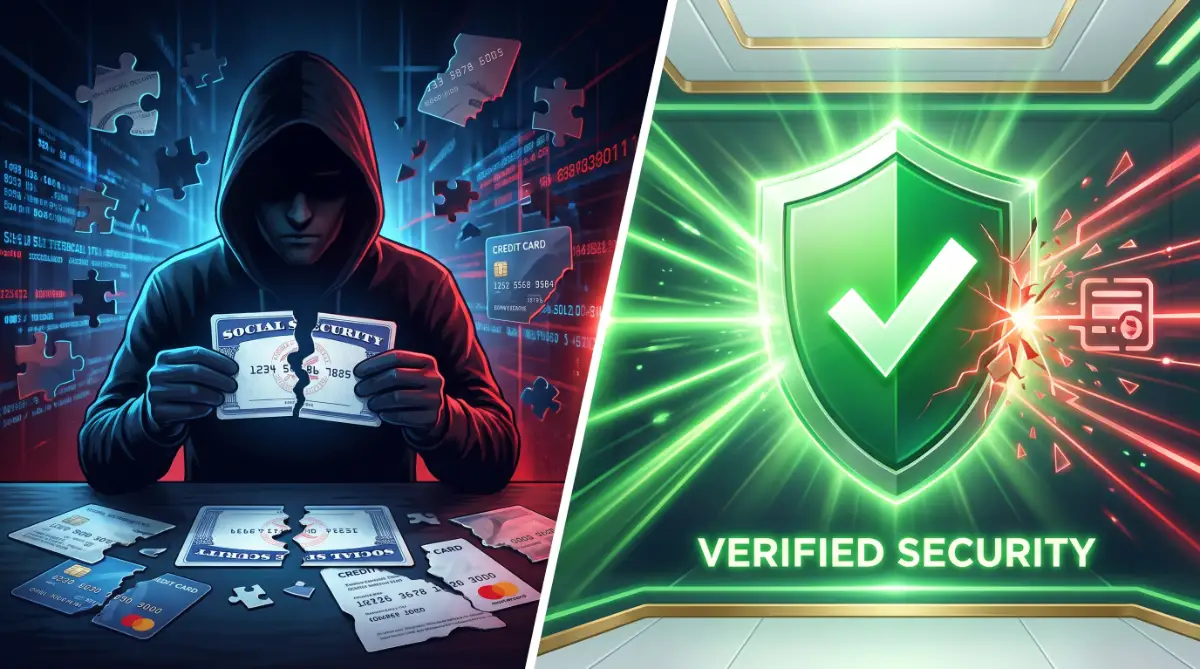
If you lose a credit card, you can simply call the bank and cancel it immediately. If a hacker steals your online password, you just create a completely new one in a few seconds. However, you can never change your biometric data once someone finally steals it.
Your fingerprints, voice patterns, and iris scans are permanently attached to your physical body. When cybercriminals compromise this highly personal information, the damage easily lasts a lifetime. This permanent reality makes physical identity theft incredibly dangerous for average internet users.
Many people blindly trust their smartphones to hold this sensitive data without questioning the basic security settings. I always remind my clients that everyday convenience should never outweigh your personal safety. You can review our comprehensive guide on understanding identity theft protection to see just how vulnerable your digital profile really is.
How Digital Thieves Steal Your Face
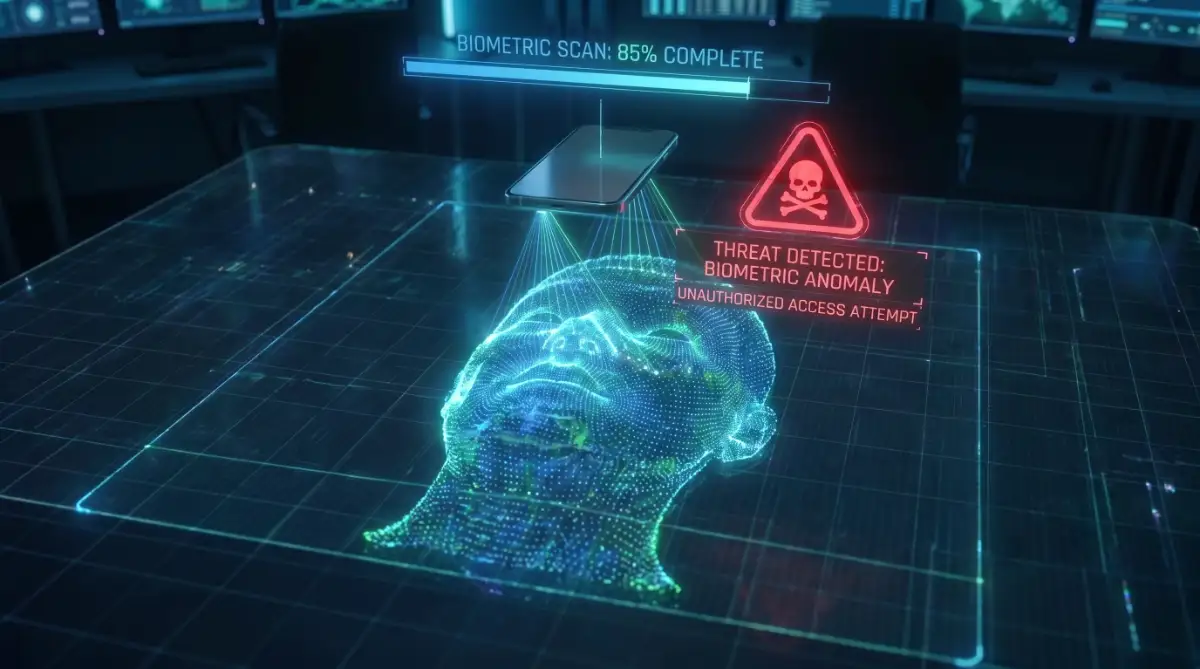
Hackers do not need to physically touch you to map out your facial geometry today. They often use automated scripts to scrape millions of high-resolution photos from open social media accounts. They use these massive public data dumps to create incredibly accurate 3D models of your face.
Once they successfully map your unique features, they can bypass facial recognition locks on your personal accounts. We have seen determined attackers drain bank accounts simply by holding a highly detailed 3D mask up to a camera lens. Your innocent public selfies are essentially giving bad guys the physical keys to your digital life.
You must lock down your public social media profiles to stop these automated scraping tools immediately. Making your personal accounts private prevents unknown strangers from harvesting your daily photos. Taking control of your public image is the first step in defending your unchangeable physical traits.
The Danger of Synthetic Media
Criminals also use stolen voice recordings to bypass banking security questions over the phone. They feed short clips of your voice into artificial intelligence programs to create highly realistic audio clones. A simple three-second recording from an online video is enough to duplicate your exact speech patterns.
These audio clones sound exactly like you, allowing thieves to quietly authorise massive wire transfers. We must treat our physical traits with the same extreme caution we use for Social Security numbers. If a stranger calls asking you to confirm your name or address, you should simply hang up.
Securing Your Devices Daily
The absolute best way to protect your physical traits is to keep the data entirely on your local device. Modern smartphones use secure enclaves to store your fingerprints locally instead of sending them up to a central server. If the data never leaves your physical phone, remote hackers cannot easily steal it.
You must aggressively disable any default settings that backup your facial scans to public cloud storage. Storing this personal information on the open internet exposes it to massive corporate server breaches. We strongly advise treating cloud storage as a public bulletin board rather than a private vault.
We highly recommend reading the Electronic Frontier Foundation (EFF) guidelines on personal privacy and digital rights. You can explore the EFF privacy surveillance guides to learn how to actively lock down your personal gadgets against snooping. Taking just five minutes to adjust these specific device settings makes you a much harder target.
Reviewing Mobile App Permissions
Have you ever wondered why a basic flashlight app needs permission to access your microphone? Many free applications secretly record your voice or scan your face to sell that information to third-party advertisers. You are constantly paying for that free mobile game with your personal privacy.
I advise you to open your phone settings right now and check every single app permission carefully. Turn off camera and microphone access for any app that does not absolutely need it to function. Less access means far fewer opportunities for silent data theft in the background.
Protecting Fingerprints and Voice Data
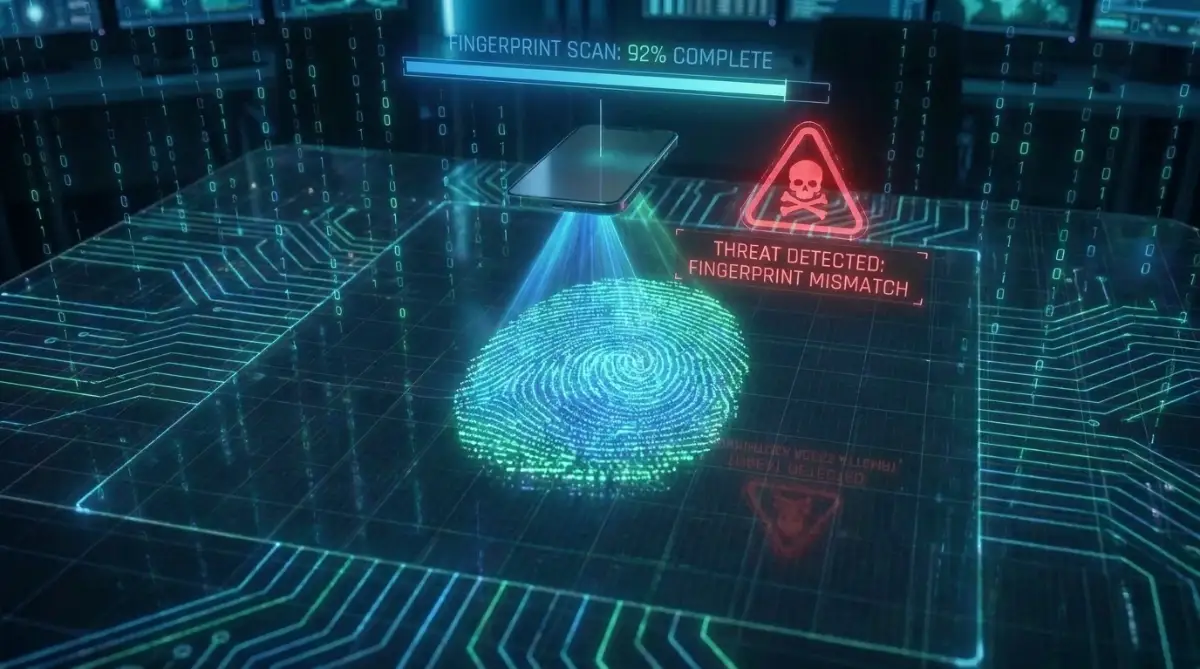
You should be extremely picky about which companies you give your fingerprints to on a daily basis. Many modern gyms and corporate offices ask for a fingerprint scan just to open the front door. You always have the legal right to ask exactly how they store and protect that specific information.
If an office building uses an outdated central database to store your thumbprint, you should refuse to use it entirely. Ask for a standard plastic keycard instead of risking your permanent identity on a cheap door scanner. Private companies often lack the heavy cybersecurity budgets needed to protect these massive databases properly.
You can learn how these external databases become targets by reading our breakdown of preventing corporate network breaches. A small business gets hacked every single day, and your fingerprints could easily be part of the stolen loot.
Securing Your Devices Daily
The absolute best way to protect your physical traits is to keep the data entirely on your local device. Modern smartphones use secure enclaves to store your fingerprints locally instead of sending them up to a central server. If the data never leaves your physical phone, remote hackers cannot easily steal it.
You must aggressively disable any default settings that backup your facial scans to public cloud storage. Storing this personal information on the open internet exposes it to massive corporate server breaches. We strongly advise treating cloud storage as a public bulletin board rather than a private vault.
We highly recommend reading the Electronic Frontier Foundation (EFF) guidelines on personal privacy and digital rights. You can explore the EFF privacy surveillance guides to learn how to actively lock down your personal gadgets against snooping. Taking just five minutes to adjust these specific device settings makes you a much harder target.
Reviewing Mobile App Permissions
Have you ever wondered why a basic flashlight app needs permission to access your microphone? Many free applications secretly record your voice or scan your face to sell that information to third-party advertisers. You are constantly paying for that free mobile game with your personal privacy.
I advise you to open your phone settings right now and check every single app permission carefully. Turn off camera and microphone access for any app that does not absolutely need it to function. Less access means far fewer opportunities for silent data theft in the background.
Protecting Fingerprints and Voice Data
You should be extremely picky about which companies you give your fingerprints to on a daily basis. Many modern gyms and corporate offices ask for a fingerprint scan just to open the front door. You always have the legal right to ask exactly how they store and protect that specific information.
If an office building uses an outdated central database to store your thumbprint, you should refuse to use it entirely. Ask for a standard plastic keycard instead of risking your permanent identity on a cheap door scanner. Private companies often lack the heavy cybersecurity budgets needed to protect these massive databases properly.
You can learn how these external databases become targets by reading our breakdown of preventing corporate network breaches. A small business gets hacked every single day, and your fingerprints could easily be part of the stolen loot.
The Hidden Dangers of DNA Testing
Beyond faces and fingerprints, your genetic code is the ultimate form of unchangeable physical data. Commercial DNA testing kits have become extremely popular for tracking family ancestry and inherited health traits. However, mailing your physical saliva to a private company introduces massive, permanent security risks.
These powerful corporations store millions of highly sensitive genetic profiles on central servers. If a hacker breaches that specific database, your complete biological blueprint is exposed to the entire internet forever. Criminals can sell this sensitive health information to insurance companies or malicious actors on the dark web.
You must read the privacy policy carefully before you ever spit into a plastic tube. Opt out of any clauses that allow the company to share your genetics with outside third-party researchers. Your DNA is the absolute core of your physical identity, and you must protect it fiercely.
Government Regulations and Your Rights
Thankfully, lawmakers are finally waking up to the massive dangers of physical identity theft. Several regions now strictly regulate how corporations can collect and store your highly personal features. These protective laws give you the legal power to demand the immediate deletion of your digital profile.
The Biometric Information Privacy Act (BIPA) in Illinois is a great example of this strong legal protection. It forces companies to get explicit written consent before they even attempt to scan your face. If they fail to secure your data, you can actively sue them for massive financial damages.
We expect to see similar laws pop up across the entire country over the next few years. In the meantime, you must act as your own personal security guard every time you go online. Never assume a private company has your best interests at heart when they ask for a retina scan.
The Role of Compliance Standards
Federal agencies also provide strict security frameworks that organisations must follow to protect your identity. The National Institute of Standards and Technology (NIST) leads the way in testing these complex authentication systems. You can review the official NIST biometric standards to see how experts actually measure fingerprint scanner accuracy and safety.
When companies strictly follow these government guidelines, your personal information stays much safer. However, you should still remain incredibly cautious about handing over your physical identity to a private corporation. Treat your face and voice like cold, hard cash.
Adopting Safer Authentication Habits
Biometrics are incredibly convenient, but they should never be your only line of digital defence. We strongly advise using a strong, unique password alongside your daily fingerprint scan. This combination is known as multi-factor authentication (MFA), and it stops most cyberattacks instantly.
If a clever hacker steals your fingerprint, they still cannot access your bank without the written password. You can dive into our step-by-step tutorial on setting up multi-factor authentication to easily secure your daily accounts. Layered security makes you an incredibly difficult target for lazy cybercriminals.
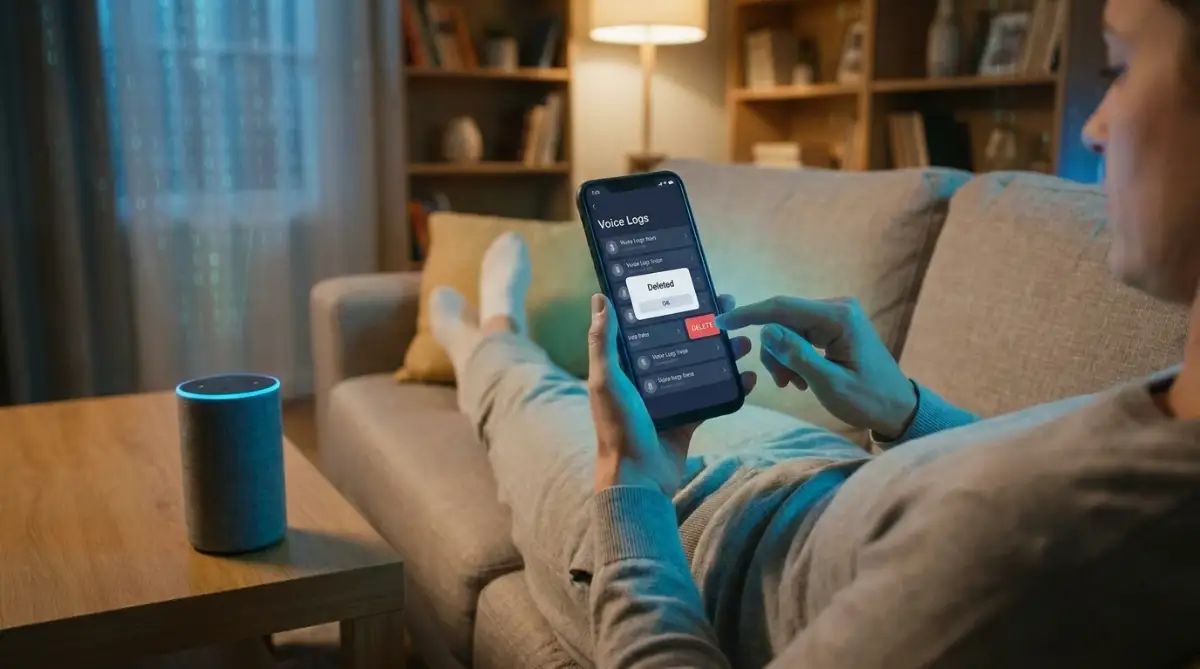
You should also regularly clear your voice search history from digital home assistants like Alexa or Siri. These technology companies store thousands of your casual voice clips on remote servers for years at a time. Deleting this history actively removes the exact audio files that hackers use to clone your speech.
The Power of Local Storage
Always check your device settings to ensure biometric data stays directly on the physical hardware. When you buy a new laptop, completely skip the cloud backup options for your fingerprint login. Keeping the file locally prevents it from being intercepted while travelling across a public Wi-Fi network.
If an app refuses to let you store your face scan locally, simply delete the app entirely. No software program is ever worth compromising your permanent physical traits.
Frequently Asked Questions
What is biometric data privacy?
Biometric data privacy refers to the secure handling and protection of your unique physical traits, like fingerprints and facial scans. It ensures that corporations and hackers cannot collect, share, or misuse your physical identity without your explicit permission.
Can stolen biometric data be changed?
No, you cannot naturally change your fingerprints, iris patterns, or vocal cords once they are stolen by cybercriminals. This permanent nature makes physical identity theft incredibly dangerous, as the compromised data can be abused for a lifetime.
Is facial recognition safe to use?
Facial recognition is generally safe if the processing happens locally on a highly secure device like a modern smartphone. However, it becomes incredibly dangerous when companies upload your facial scans to unprotected public cloud servers.
Your Final Action Plan
Protecting your physical identity requires a continuous daily commitment to privacy and digital security. You cannot afford to hand over your fingerprints to every single app or office building that asks. Treat your physical traits as your most valuable personal asset.
Start today by auditing your smartphone and turning off microphone access for unused mobile apps. Make sure your banking applications require both a written password and a face scan to open properly. Delete your voice history from your smart home speakers right now.
By keeping your data stored locally and questioning corporate privacy policies, you stop hackers dead in their tracks. You have the absolute power to lock down your digital life today. Take these simple steps immediately, and you will effectively secure your unchangeable identity for years to come.
Disclaimer: The information provided in this article is for educational and informational purposes only. It does not constitute legal, financial, or professional cybersecurity advice. Always consult with certified IT professionals and legal counsel when making decisions about personal privacy or corporate data compliance.
Author Bio:

Faisal Shahzaib
Faisal Shahzaib is the chief editor at Nexibound and a digital content strategist based in Bangladesh, specialising in cybersecurity, personal finance, and SaaS. With a background in digital marketing, he focuses on translating complex technical and financial topics into practical, easy-to-follow guides for everyday readers. Faisal is committed to publishing well-researched, accurate, and genuinely useful content on every Nexibound article.
Connect on LinkedIn or visit his profile page.