
Strategies for Overcoming Algorithmic Bias in Machine Learning
- The Silent Threat of Machine Learning Bias
- How Flawed Data Creates Biased Outcomes
- The Problem with Historical Training Data
- Testing for Algorithmic Fairness
- Implementing Continuous Audits
- Practical Strategies to Fix Model Bias
- Diversifying the Data Science Team
- Your Final Action Plan
- Frequently Asked Questions
You can overcome algorithmic bias in machine learning by actively diversifying your training data, continuously running fairness audits, and ensuring your engineering teams reflect diverse backgrounds. Fixing these models prevents silent discrimination and builds highly ethical AI workflows.
The Silent Threat of Machine Learning Bias
You sit down to review your company's latest software deployment. Your engineering team just launched a brand new automated hiring tool to sort through thousands of resumes. You trust the math to find the absolute best candidates for the job.
A few weeks later, you realise something is terribly wrong. The software is quietly rejecting every single female applicant who applied for an engineering role. The machine is not broken; it is doing exactly what it was trained to do.
This terrifying scenario is the exact definition of algorithmic bias. It happens when an artificial intelligence system produces systematically prejudiced results due to flawed assumptions in the machine learning process.
We blindly trust computers because we think they are perfectly objective and immune to human emotion. That assumption is a massive operational danger. AI systems learn to make decisions by studying millions of historical data points provided by human beings. If humans made biased decisions in the past, the software copies those exact mistakes today.
Leaving these flaws unchecked creates massive legal and ethical nightmares for your business. It is incredibly similar to ignoring silent security vulnerabilities in cloud data storage. You assume your internal systems are perfectly safe until a catastrophic public failure destroys your brand reputation. We are going to break down how to spot these silent biases and clean up your data pipelines.
How Flawed Data Creates Biased Outcomes
To fix the machine, you must understand exactly how it learns. Algorithms are essentially empty shells waiting for instructions. We fill those shells with training data sets so the program can recognise patterns.
If you want a computer to recognise a picture of a cat, you feed it ten thousand photos of cats. The computer learns the shape of the ears, the tail, and the fur. However, if every single photo you provide features a white cat, the machine will fail completely when it sees a black cat.
The software will confidently declare that the black cat is a dog. The algorithm did not malfunction; it just lacked the proper context to make an accurate decision.
The Problem with Historical Training Data
When businesses train AI to approve bank loans or determine medical treatments, they use historical company records. These records are packed with decades of human prejudice and subjective decision-making.
If a bank historically rejected mortgage applications from specific minority neighbourhoods, the new AI studies that history. It mathematically determines that people from those zip codes are bad investments. The machine silently automates redlining without any human employee ever realising it.
You have to sanitise your inputs before feeding them to a learning model. This requires the exact same caution you use when preventing hidden privacy leaks in everyday AI automation tools. If you input toxic information, you will absolutely receive a toxic output.
For highly technical guidelines on managing these specific risks, the National Institute of Standards and Technology (NIST) publishes an extensive AI Risk Management Framework. Reading this official documentation helps organisations align their internal models with federal fairness standards.
Testing for Algorithmic Fairness
You cannot fix a bias you cannot see. Many companies build a model, test it once for basic accuracy, and release it into the wild. This "set it and forget it" mentality guarantees eventual failure.
You must actively stress-test your artificial intelligence. Professional data scientists use a technique called "adversarial testing". They intentionally feed the machine highly confusing or contradictory data to see if it makes a prejudiced decision under pressure.
If your facial recognition software perfectly identifies light-skinned users but fails to recognise dark-skinned users, your testing phase is incomplete. You have an obligation to pause the launch and fix the dataset.
Implementing Continuous Audits
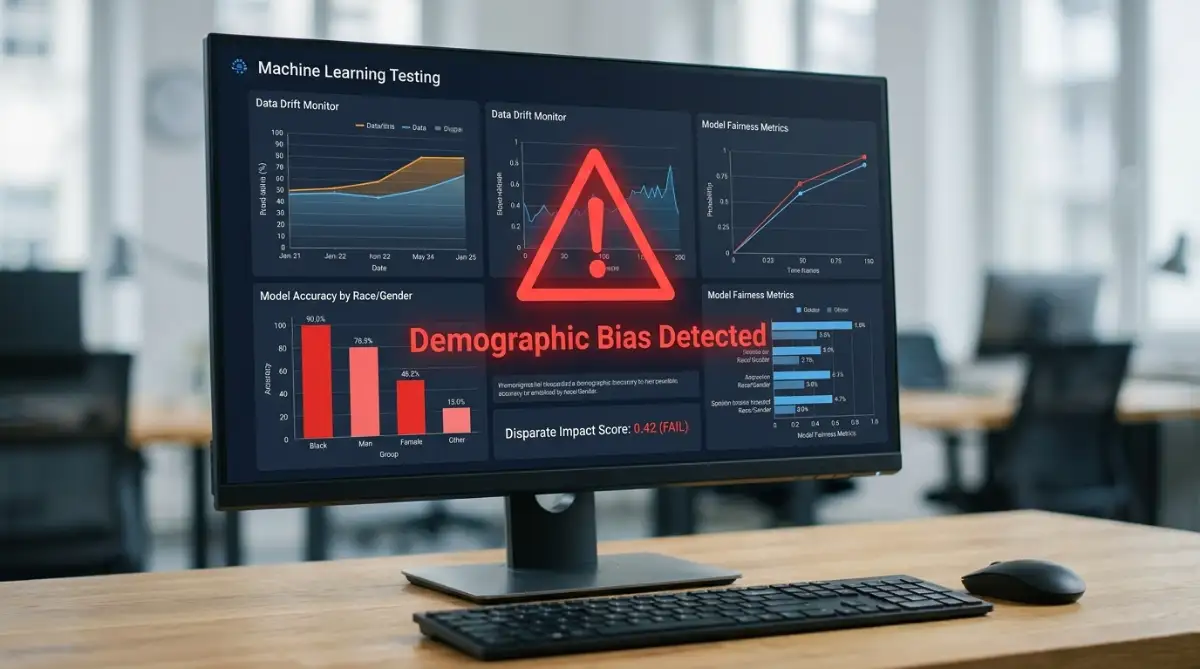
Machine learning models drift over time. As they absorb new information from actual users, their baseline behaviours slowly change. A model that was perfectly fair in January might become highly biased by November.
You solve this by implementing continuous fairness audits. You assign a dedicated team to review a random sample of the machine's decisions every single month. They compare the automated outcomes against strict ethical benchmarks.
If the model starts denying qualified candidates or favouring specific demographics, the team pulls it offline instantly.
This comparison table clearly outlines how identifying the specific symptom leads directly to the proper data correction.
Practical Strategies to Fix Model Bias
Once you find the flaws, you must rebuild the architecture. You cannot simply tell a computer to "be fair". You have to change the mathematical weights inside the programming.
The first step is gathering highly representative data. If your current dataset is ninety per cent male and ten per cent female, you must artificially balance the scales. Data engineers use techniques like "oversampling" to duplicate the minority records until the machine gives them equal weight.
You also need to remove "proxy variables". An AI might not know a person's race, but it definitely knows their zip code, income level, and high school. The machine uses these proxies to guess the protected information and discriminate anyway.
Diversifying the Data Science Team
The absolute strongest defence against algorithmic bias is a diverse engineering department. A team composed entirely of people from the exact same background will naturally share the exact same blind spots.
They will build a product that works perfectly for them but fails miserably for everyone else. When you hire data scientists from different genders, cultures, and socioeconomic backgrounds, they spot errors immediately. They will ask questions about edge cases that a homogenous team would never even consider.
This human element is the ultimate safeguard. It requires the same structural dedication as executing a comprehensive AI compliance audit safely. You build a team that naturally questions the assumptions hidden deep inside your company's processes.
To understand the broader societal impact of building inclusive technology, leading institutions like the Stanford Institute for Human-Centred Artificial Intelligence publish brilliant research on integrating human ethics directly into machine learning.

Your Final Action Plan
You now possess the exact technical mindset required to clean up your artificial intelligence tools. You understand that machines are not inherently objective, and they require strict human supervision to operate fairly.
Do not let the fear of bad data stop you from building incredible automation tools. You simply need to enforce strict guardrails before you deploy your code to the public.
Your Immediate AI Ethics Checklist:
- Audit Your Datasets: Open your primary training database today. Review the demographics to ensure all age, gender, and racial groups are equally represented.
- Remove Proxy Variables: Strip your training data of unnecessary identifiers like zip codes and high school names that trigger hidden discrimination.
- Schedule Monthly Tests: Set a recurring calendar reminder to manually review fifty random decisions made by your machine learning model.
- Diversify Your Reviewers: Ensure your final software testing phase includes employees from completely different backgrounds to catch invisible blind spots.
Building fair technology is an ongoing commitment. By actively monitoring your datasets and questioning the math, you protect your customers from unfair treatment. Take control of your algorithms today and ensure your software helps people instead of silently harming them.
Frequently Asked Questions
Can we completely eliminate bias in AI?
No, achieving absolute zero bias is mathematically and practically impossible. However, you can significantly reduce the harm by actively balancing your training data and running continuous fairness audits.
What is a proxy variable in machine learning
A proxy variable is a piece of data that indirectly reveals protected information about a person. For example, an algorithm might use a specific zip code to guess a user's race or income level.
Who is legally responsible for algorithmic bias?
The company that deploys the biased software is ultimately held legally responsible for any discriminatory outcomes. Regulatory agencies will fine the business owners, not the actual machine or the original code developers.
Disclaimer: This blog post is for informational and educational purposes only. I am not a certified data privacy attorney or a legal compliance officer. Artificial intelligence regulations and machine learning compliance laws vary significantly by state and country. Always consult with a licensed legal professional and a certified AI ethics board before deploying automated decision-making software in your business.
Author Bio:

Faisal Shahzaib
Faisal Shahzaib is the chief editor at Nexibound and a digital content strategist based in Bangladesh, specialising in cybersecurity, personal finance, and SaaS. With a background in digital marketing, he focuses on translating complex technical and financial topics into practical, easy-to-follow guides for everyday readers. Faisal is committed to publishing well-researched, accurate, and genuinely useful content on every Nexibound article.
Connect on LinkedIn or visit his profile page.