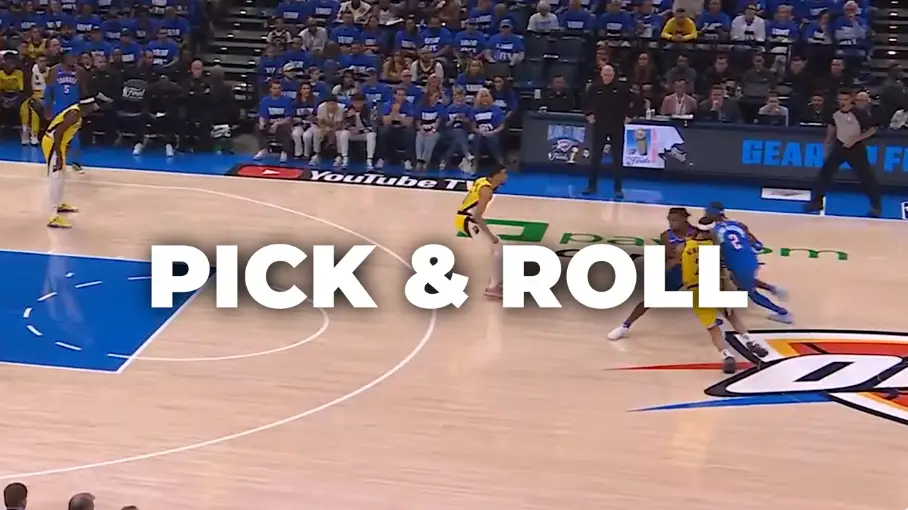
Mastering the Pick and Roll: Mechanics, Strategies, and Variations
Picture this: you are watching a crucial fourth-quarter possession, or perhaps you are playing in a highly competitive local pickup game. The shot clock is ticking down, the defence
is locked in, and one-on-one isolation simply isn't working. Then, a teammate sets a simple, sturdy screen at the top of the key. In a fraction of a second, the defensive structure collapses, a passing lane opens, and the offence gets a high-percentage look at the basket.
This is the magic of the pick and roll. It is not just a play; it is the foundational building block of modern basketball geometry. From local gymnasiums to the highest professional leagues, the pick and roll (often abbreviated as the P&R) forces defences to make split-second decisions where almost every choice leaves them vulnerable.
Whether you are a point guard trying to improve your court vision, a big man looking to become an offensive hub, or a fan wanting to understand the game on a deeper level, mastering the concepts behind this action is essential. Here is a comprehensive breakdown of the mechanics, reads, strategies, and common mistakes of the pick and roll.
The Anatomy and Mechanics of a Legal Screen
Before diving into advanced reads, you must understand the basic anatomy of the action. The pick and roll involves two offensive players: the ball-handler and the screener (usually a larger forward or centre).
Setting the Screen:
The screener must establish a legal position. This means setting a wide, balanced base with feet shoulder-width apart and remaining stationary at the moment of contact. The screener should cross their arms over their chest or groin to protect themselves and avoid being called for an illegal pushing foul. (Note: While exact interpretations of a "moving screen" can vary slightly between international FIBA rules, the NBA, and collegiate levels, the core principle of maintaining a stationary vertical cylinder remains the same across all rulebooks.)
Using the Screen:
The ball-handler's job is just as critical. They must "set up" their defender. This usually involves a hesitation or a hard jab step in the opposite direction of the screen to shift the defender's weight. Once the defender shifts, the ball-handler must explode off the screen, brushing shoulder-to-shoulder with the screener. This tight angle leaves no room for the defender to squeeze through, effectively forcing them out of the play.
Reading the Defense: The Strategic Chess Match
The true art of the pick and roll lies in what happens immediately after the screen is set. The ball-handler must act like a quarterback, reading the defence in real-time and reacting to their coverage. Here are the most common defensive strategies and how the offence should counter them.
1. Drop Coverage
In drop coverage, the screener’s defender sags back into the paint to protect the rim, while the ball-handler’s defender fights over the top of the screen.
- The Offensive Counter: The ball-handler should take advantage of the space given by the dropping big man. This is the perfect time to pull up for a mid-range jump shot or execute a floater before challenging the rim protector. If the dropping big man steps up too high, the ball-handler can throw a lob pass to the rolling screener.
2. The Switch
Switching is exactly what it sounds like: the two defenders trade assignments. The big man picks up the guard, and the guard picks up the rolling big man.
- The Offensive Counter: Switching neutralises the initial advantage of the screen, but it creates two severe mismatches. The offence can clear out and let their quick ball-handler isolate against the slower big man on the perimeter, or they can pass the ball inside, allowing their larger screener to post up the smaller guard in the paint.
3. The Blitz or Hedge
In a blitz or hard hedge, the screener’s defender aggressively jumps out to trap the ball-handler alongside the original defender. The goal is to force the ball out of the guard's hands immediately.
- The Offensive Counter: The ball-handler must stay composed, retreat your dribble to avoid a turnover, and find the screener. Because two defenders are on the ball, the screener should execute a "short roll"—stopping near the free-throw line rather than running all the way to the basket. Once the screener catches the ball in the middle of the floor, the offence has a 4-on-3 advantage, leading to an easy pass to an open shooter in the corner or a cutter at the rim.
Common Mistakes That Ruin the Play
Even though the pick and roll is a fundamental concept, it is heavily mismanaged at the amateur level. Avoiding these common pitfalls is the fastest way to elevate your offensive execution.
Rejecting the Screen Improperly:
Sometimes, the defence anticipates the screen and cheats by jumping the route. In this case, the ball-handler should "reject" the screen and drive the opposite way. However, many players reject the screen without setting up the defender, driving straight into help defence and turning the ball over. You must read the defender's hips; if they completely open up to the screen early, that is your cue to reject it.
The "Ghost" Roll:
A major mistake screeners make is slipping to the basket before making any physical contact with the defender. While a perfectly timed "slip" can be a great advanced read, doing it too often means the ball-handler's defender is never impeded. The screener must be willing to embrace physical contact to free up their teammate.
Poor Court Spacing:
A pick and roll is a two-man game, but it relies on all five players. If the other three offensive players are standing too close to the paint, their defenders will simply step in and clog the rolling lanes. The remaining players must stay spaced out beyond the three-point line, forcing their defenders to choose between stopping the pick and roll or leaving a shooter wide open.
Advanced Variations: Beyond the Traditional Roll
As defences have evolved to stop the traditional pick and roll, offences have developed brilliant variations to keep defenders guessing.
The Pick and Pop
Instead of rolling to the basket after setting the screen, the screener steps backward (or "pops") into open space on the perimeter. This is highly effective if the screener is a capable outside shooter. It completely neutralises drop coverage and forces the opposing big man to close out on a shooter, opening up driving lanes for the guards.
The Empty Corner Pick and Roll
Usually, a pick and roll is run with offensive players spacing the floor in the corners. In an empty corner set, the offence clears out one entire side of the court. With no help from defenders waiting in the corner to tag the rolling big man, the defence is put in a highly vulnerable two-on-two isolation scenario.
The Spanish Pick and Roll
Named after its origins in European basketball, the Spain P&R is a devastating three-man action. As the primary screen is set and the big man begins to roll, a third offensive player (usually a shooter) sets a "back screen" on the rolling big man's defender. This creates immense confusion. The defence has to navigate the initial screen, the secondary back screen, and the shooter flaring out, usually resulting in a wide-open layup or an uncontested three-pointer.
Practical Closing Thoughts
Mastering the pick and roll transforms a stagnant offence into a dynamic, unpredictable scoring machine. It is not about running a set play; it is about establishing a framework where you can read and react to whatever the defence gives you.
For players looking to improve, focus heavily on the details: setting a wide, legal base, changing pace with the dribble, and keeping your eyes up to scan the floor. For fans, watching the subtle chess match between the ball-handler and the opposing big man will unlock a completely new appreciation for the modern game. The pick and roll may be simple in its design, but its variations are infinite.