Climate Energy Resilience: Keeping Power On in Extreme Weather
We plug in our phones and turn on our heaters every day, assuming the power will always be there. But our electrical grid was built decades ago for a climate that simply doesn't exist anymore. Relying entirely on hundreds of miles of exposed utility wires to protect your family during a winter storm or heatwave is a gamble you don't have to take. You can build an independent, localised energy buffer right at home that keeps the lights on when the central grid collapses.
Comparing Grid Reliability vs. Resilient Design:
- The Centralised Model: Large power plants send electricity across hundreds of miles of exposed wires. A single falling tree branch or damaged transformer knocks out power to an entire city.
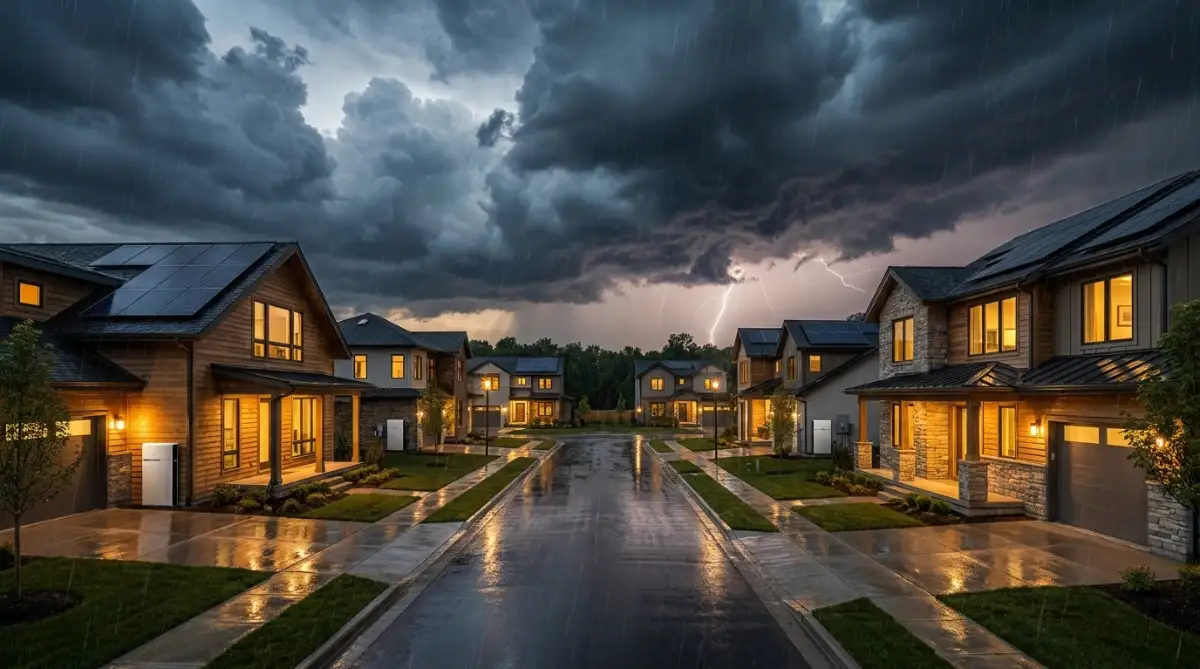
- The Resilient Network: Local rooftop solar, home battery banks, and community microgrids generate and store power on-site. If the main transmission line breaks, your home isolates itself and keeps running.
Climate energy resilience is the ability of an energy system to anticipate, absorb, adapt to, and rapidly recover from weather disruptions. It means building power networks—from national utility grids down to your own breaker panel—that refuse to fail when weather hits hard.
Here is an in-depth breakdown of how climate-resilient energy systems work, why decentralisation matters, and how you can protect your own household from prolonged blackouts.
Table of Contents
- The Fragility of Centralised Electricity Grids
- What Is Climate Energy Resilience?
- Centralised Grid Hardening vs. Distributed Microgrids
- The Core Technologies Powering Energy Resilience
- Regional Approaches: How the US, UK, and Europe Manage Risk
- Building Household-Level Energy Resilience: A Step-by-Step Path
- Common Misconceptions About Energy Resilience
- What Can You Do With This Information?
- Your Next Step
- Frequently Asked Questions
- Summary: The Transition to Self-Healing Energy Systems
Your Climate Energy Resilience Checklist:
- Ditch Grid-Tied-Only Solar: Standard solar panels turn off in blackouts; you need an islanding inverter to generate power off-grid.
- Isolate Your Critical Circuits: Move your fridge, well pump, and Wi-Fi to a sub-panel so a smaller battery lasts for days.
- Seal the Thermal Envelope: Air sealing and heavy curtains keep your home livable for 72 hours without active HVAC.
- Tap Your Driveway: An electric vehicle with bidirectional charging holds enough power to run basic home circuits for nearly a week.
The Fragility of Centralised Electricity Grids
Traditional electric grids depend on long-distance transmission corridors. When high winds knock trees into high-voltage lines, an entire region can lose service in an instant.
Weather stresses electrical systems in several distinct ways:
- Extreme Heat: High temperatures cause overhead copper and aluminium power lines to sag into tree branches. At the same time, high heat reduces the efficiency of transmission wires while air conditioners drive peak demand to record levels.
- Severe Freezes: Ice accumulation adds tonnes of physical weight to transmission towers and wires, snapping poles. Freezing temperatures can also freeze natural gas wellheads, water intake valves, and fuel pumps at generating stations.
- Flooding: Heavy rainfall submerges ground-level substations. Saltwater storm surges corrode sensitive electronic switchgear, requiring complete replacement rather than simple resets.
- Wildfires: High winds spark fires from downed utility lines, forcing utilities to proactively shut off power to entire counties to prevent catastrophic blazes.
The Growing Financial and Social Cost of Blackouts
A power outage is no longer just an inconvenience where you light a candle and wait an hour. Modern society runs entirely on digital infrastructure: water treatment plants, cell towers, hospital machinery, and payment terminals.
When a major storm knocks out power for multiple days, the economic damage quickly runs into billions of dollars. Food spoils in grocery warehouses, manufacturing stops, and vulnerable residents face life-threatening indoor temperatures.
What Is Climate Energy Resilience?
The energy industry often confuses two important terms: reliability and resilience.
- Reliability is about standard day-to-day operations: keeping power flowing during normal weather, minimising brief interruptions, and fixing standard equipment failures quickly.
- Resilience is about surviving the unexpected: withstanding an intense storm, keeping emergency services online during an outage, and restoring electricity quickly after widespread physical destruction.
The Three Dimensions of Climate Energy Resilience:
- 1. Absorb: Physical grid hardening stops the system from snapping on impact.
- 2. Adapt: Smart digital controls reroute power and isolate damaged circuits in real time.
- 3. Recover: Local batteries and microgrids restore service quickly without waiting on long-distance line repairs.
The Three Core Principles: Absorb, Adapt, and Recover
A truly resilient energy network operates on three distinct defensive layers:
- Absorptive Capacity: The physical strength of the hardware. This includes steel poles replacing wooden utility poles, underground cabling in flood-prone areas, and thermal shielding around transformers.
- Adaptive Capacity: The digital intelligence of the network. When a storm damages a line in one neighbourhood, smart switches automatically isolate that damaged section and reroute electricity from another direction within milliseconds.
- Restorative Capacity: The speed of recovery. When total failure occurs, localised generators, neighbourhood batteries, and mobile emergency units restart the system from the bottom up rather than waiting for long-distance lines to be rebuilt.
To learn how domestic automation coordinates electrical loads during outages, read our comprehensive guide on smart home automation for energy savings.
Centralised Grid Hardening vs. Distributed Microgrids
Utility companies and property owners use two competing strategies to defend against climate disruptions:
The Core Technologies Powering Energy Resilience
Decentralising power generation is the most effective way to prevent widespread outages. Instead of relying on a distant power station, local neighbourhoods produce, store, and manage their own power.
How a Distributed Microgrid Works:
- Rooftop solar arrays, local battery banks, and bidirectional electric vehicles feed energy into a smart microgrid controller.
- When the central utility line drops, an automatic transfer switch severs the street connection in milliseconds.
- Your home continues running on clean, local power without interruption.
1. Islandable Microgrids: Generating Power When the Grid Drops
A microgrid is a localised group of electricity sources (such as solar panels, small wind turbines, and backup generators) and energy storage devices that normally connect to the main utility grid.
The key feature of a resilient microgrid is islanding.
When a storm knocks out the main utility feed, an automatic transfer switch severs the physical connection to the street in less than a second. This protects utility repair workers from dangerous backfed electricity while allowing the local microgrid to power neighbourhood homes, medical clinics, and grocery stores continuously.
2. Battery Energy Storage Systems (BESS) and Load Shifting
Solar panels cannot generate electricity at night or during heavy storm cover. Pairing solar arrays with stationary Battery Energy Storage Systems (BESS) creates an uninterrupted power buffer.
Modern lithium-iron-phosphate (LFP) batteries do two jobs:
- Emergency Backup: When the grid fails, the battery supplies instant electricity to keep refrigeration, water pumps, and lights running without interruption.
- Peak Shifting: During normal hot days, the battery discharges stored clean energy during late afternoon peak hours when utility rates are highest, lowering bills and taking strain off the stressed public grid.
3. Bidirectional EV Charging: Your Car as a Mobile Backup Generator
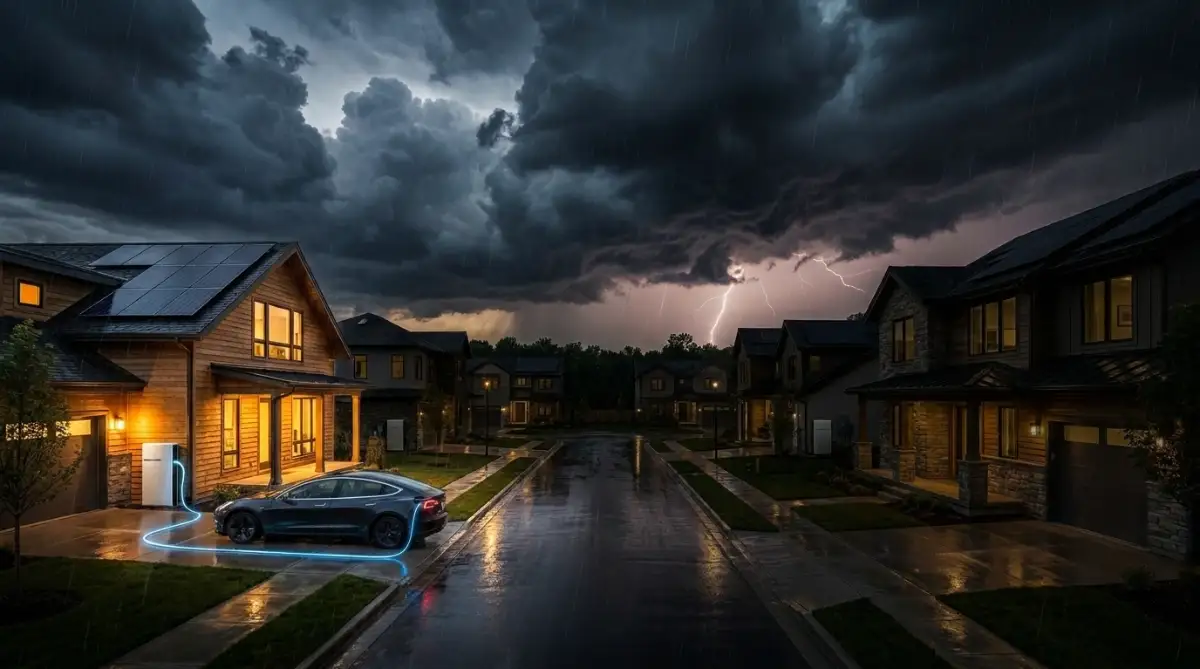
An electric vehicle is not just transportation; it is a giant rolling battery pack. A standard electric car holds between 60 kWh and 100 kWh of energy—enough to power an average home for three to seven days during an emergency.
With Vehicle-to-Home (V2H) and Vehicle-to-Grid (V2G) bidirectional charging:
- Your vehicle plugs into a specialised bidirectional home charger.
- If a storm knocks out the utility grid, your car automatically pushes electricity back through your home panel to power your furnace, refrigerator, and essential lights.
- You avoid spending thousands on a dedicated home battery pack by using the battery already parked in your driveway.
4. Automated Demand Response and Smart Switching
Smart electrical panels use computer-controlled relays to prioritise energy automatically. During a blackout, the smart panel cuts power to high-draw, non-essential loads (like hot tubs, EV chargers, and clothes dryers) while directing all available battery power to your medical devices, water well pump, and internet router.
To explore how unified local hubs manage smart switches and sensors securely without internet access, see our guide on how to build a unified smart home ecosystem without app clutter.
Regional Approaches: How the US, UK, and Europe Manage Risk
Because geography dictates climate hazards, different regions approach energy resilience with distinct regulatory and engineering solutions.
United States: Wildfire Shutoffs and Severe Storm Hardening
The US power system spans three massive, interconnected grids crossing dozens of regulatory jurisdictions.
In the American West, utilities regularly execute Public Safety Power Shutoffs (PSPS), cutting power to hundreds of thousands of customers during high-wind days to prevent fallen power lines from sparking wildfires.
Meanwhile, hurricane-prone southeastern states invest heavily in grid undergrounding (burying overhead lines) and deploying FEMA Building Resilient Infrastructure and Communities (BRIC) grants to fund local municipal microgrids.
United Kingdom: Flood Defences and Flexible Distribution Networks
In the UK, the biggest threats are coastal surges, river flooding, and intense winter windstorms. Because much of the UK housing stock relies on gas or electric heating, winter power outages create dangerous domestic freeze conditions.
Under oversight from the energy regulator Ofgem, British Distribution Network Operators (DNOs) must harden substations located in floodplains using raised concrete plinths and modular flood barriers.
The UK is also developing local flexibility markets, paying businesses and home battery owners to reduce power demand or inject battery storage into the grid during winter stress events.
European Union: Interconnectors and the European Grid Action Plan
European power systems face changing weather extremes, including severe summer droughts that warm river waters, limiting the cooling capacity of thermal and nuclear power plants in France and Germany [1].
The European Commission’s European Grids Action Plan and the revised TEN-E (Trans-European Networks for Energy) regulations focus heavily on cross-border resilience [2].
By building high-voltage direct current (HVDC) subsea and overland interconnectors, European countries can transfer surplus offshore wind power from the North Sea down to Southern Europe or import Scandinavian hydropower during continental heatwaves.
Building Household-Level Energy Resilience: A Step-by-Step Path
You do not have to wait for your regional utility company to rebuild its high-voltage lines. You can take direct steps to protect your property and family today.
The Three-Step Home Resilience Architecture:
- Passive Shell: Air sealing and insulation keep indoor temperatures safe for days without running active HVAC.
- Critical Sub-Panel: Separates essential life-support circuits from heavy non-essential appliances.
- Solar Plus Battery: Creates a local power loop that recharges daily during grid outages.
Step 1: Passive Thermal Survivability
Before buying batteries or generators, focus on your home's physical structure. Passive thermal survivability is the ability of a building to maintain safe indoor temperatures during a blackout without active heating or cooling.
- In cold climates, air-sealing windows, adding attic insulation, and installing thermal window drapes prevent interior temperatures from plummeting to freezing levels when the furnace loses power.
- In hot climates, exterior window shades and radiant attic barriers block solar heat, keeping living spaces habitable for days during an extended summer brownout.

For practical, zero-waste ways to reduce household overhead and air drafts, explore our detailed walkthrough on the realistic sustainable living guide that saves money.
Step 2: Critical Load Separation and Sub-Panels
Trying to back up an entire house—including central air conditioning, double ovens, and electric water heaters—requires an enormous, expensive battery system.
A smarter, more cost-effective approach is installing a critical loads sub-panel.
An electrician moves only your most important circuits into this dedicated panel:
- Refrigerator and freezer
- Internet router and communication hubs
- Well pump or municipal water pressure booster
- A few essential lighting and device-charging circuits
The Emergency Circuit Rule (What Gets Moved to Your Sub-Panel):
- Non-Negotiable (Connect): Refrigerator/freezer, medical equipment, home Wi-Fi router, water well pump, and furnace blower.
- Luxury Drains (Leave on Main Grid): Dishwasher, central air compressor, electric water heater, and clothes dryer.
- Why this works: Dropping heavy heating elements allows a modest battery to run your essentials for days instead of hours.
Step 3: Solar Plus Storage with Islanding Capability
Standard grid-tied solar systems do not work during a blackout. For safety reasons, standard inverters shut down the moment the grid drops to prevent sending power into lines that utility crews might be repairing.
To maintain power during an outage, your system must include an islanding inverter and an automatic transfer switch.
When the sun comes up the morning after a storm, your solar panels will power your critical loads directly while simultaneously recharging your home battery, creating a self-sustaining power loop that can run indefinitely.
How Long Does a 10 kWh Home Battery Actually Last?
Insider Insight on Generator Fuel: If you rely on a gas or diesel generator for backup, remember that service stations cannot pump fuel when the local power grid fails. A solar-plus-storage system generates fuel from daylight, completely eliminating fuel storage and supply-chain risks.
Common Misconceptions About Energy Resilience
Resilience Myth vs. Reality:
- Myth 1: "My standard solar panels will power my home during an outage."
- Reality: Standard grid-tied solar turns off immediately during a blackout as a safety precaution. You must have an islanding-capable inverter and battery to generate power off-grid.
- Myth 2: "A portable gas generator solves everything."
- Reality: Portable generators are noisy, create toxic fumes, and depend on gas stations that cannot pump fuel during widespread power failures.
- Myth 3: "Only rural areas experience major blackouts."
- Reality: Dense urban centres frequently suffer prolonged outages because repairing buried cables and city substations takes days of heavy excavation.
- Myth 4: "Energy resilience requires going completely off-grid."
- Reality: Disconnecting entirely from the grid is expensive and impractical. The gold standard is a grid-tied hybrid setup that islands automatically only when the main grid goes down.
To see how personal financial planning and disciplined habits help fund home resilience upgrades, review our guide on how to build wealth in silence.
What Can You Do With This Information?
For Homeowners and Families
- Identify your home’s critical electrical loads and map out which appliances you cannot live without during a three-day winter freeze or summer heatwave.
- Seal window drafts and insulate exterior doors to improve passive thermal survivability before spending money on backup generators.
- If purchasing solar panels, demand an inverter system that supports battery integration and islanding capability.
For Commercial Property Owners and Landlords
- Audit backup power systems for multi-family properties to guarantee that stairwell lighting, fire alarms, and domestic water pumps stay active during grid failures.
- Evaluate parking structures for commercial solar canopies paired with battery storage to provide emergency power and EV fleet charging during disruptions.
- Explore utility demand-response programmes that pay businesses for shedding non-essential power loads during heatwaves.
For Community Planners and Local Officials
- Establish municipal emergency cooling and warming centres powered by independent solar microgrids.
- Enforce flood protection building codes for local electrical substations and water treatment plants.
- Encourage community microgrids that allow essential local businesses—like grocery stores and pharmacies—to remain open during broad regional outages.
Your Next Step
- Perform a 15-Minute Blackout Audit: Walk through your home with a notebook. List every device that requires continuous power (medical equipment, water pumps, refrigerators). Calculate their basic running wattage.
- Improve Passive Building Performance: Seal obvious air leaks around doors and attic hatches this weekend using inexpensive weatherstripping tape.
- Inspect Your Generator or Battery Setup: If you own a backup system, run a test under load today. Confirm that your transfer switch operates smoothly and that fuel or battery reserves are fully topped up.
- Research Regional Utility Incentives: Check your local electric provider’s website for rebates on smart thermostats, battery storage installations, and time-of-use tariff enrolment.
Frequently Asked Questions
What is the difference between energy reliability and climate energy resilience?
Energy reliability measures the frequency and duration of standard, day-to-day power interruptions under normal operating conditions. Climate energy resilience measures a power system's ability to withstand, adapt to, and rapidly recover from severe, low-probability, high-impact weather disasters without catastrophic failure.
Why do standard grid-tied solar panels turn off during a blackout?
Standard grid-tied solar inverters automatically shut down during an outage as a mandatory safety feature called anti-islanding. This prevents solar panels from pushing electricity back into neighbourhood power lines, which could electrocute utility line technicians working to restore the grid.
How does a microgrid help a local community during extreme weather?
A microgrid produces and stores electricity locally using assets like rooftop solar, community wind, and commercial battery banks. During a regional power outage, the microgrid isolates itself from the damaged central grid, keeping essential local facilities—such as hospitals, fire stations, and shelters—fully powered.
What is bidirectional charging (Vehicle-to-Home)?
Bidirectional charging allows an electric vehicle to both receive power from the electrical grid and discharge power back into a building. During a blackout, a bidirectional charger pulls energy from your car’s battery pack to run your home's critical circuits for several days.
Summary: The Transition to Self-Healing Energy Systems
Climate disruptions are putting unprecedented stress on ageing centralised power grids. Relying blindly on long-distance transmission lines to keep your home safe during severe weather is no longer a viable long-term strategy.
True resilience requires a fundamental transition toward decentralised, intelligent energy systems.
By hardening physical buildings, adopting distributed solar and battery storage, and installing smart controls that isolate critical loads, we transform fragile power networks into self-healing, climate-proof systems.
Taking proactive steps today guarantees that when the next major storm rolls in, your lights stay on, your home stays comfortable, and your family stays safe.
Professional Engineering and Electrical Disclaimer: The information provided in this guide is for educational and informational purposes only. It does not constitute certified electrical engineering, architectural, or professional safety advice. Working with high-voltage electrical panels, transfer switches, and grid interconnections carries a severe risk of shock, fire, and electrocution. Always hire a licensed, insured electrician and consult your local building authorities before installing backup generators, solar inverters, or battery storage equipment.
Author BIO
Faisal Shahzaib is an elite digital tech strategist, SEO data analyst, and investigative researcher specialising in sustainable living, smart automation, and climate infrastructure resilience. He breaks down complex electrical grids, local microgrids, and clean backup technologies into actionable, practical blueprints. Faisal helps property owners and communities build resilient, self-sufficient energy systems that stay online through any weather event.
Sources & External References
- [1] International Energy Agency (IEA): Climate Resilience for Energy Security Analysis
- [2] European Commission: European Grids Package and Action Plan for Grids
- [3] US Department of Energy (DOE) - Office of Electricity: Grid Modernisation and Energy Resilience Technologies
- [4] UK Office of Gas and Electricity Markets (Ofgem): Electricity Distribution Resilience and Climate Adaptation Framework